

A quick spring check for those little aches
As the days get lighter in spring, most people naturally start moving more.
More walking. More errands. More weekends out.
It’s also the time of year when small aches and niggles often appear. For most people, this isn’t anything serious. It’s usually your body adjusting to increased activity after a quieter winter.
The tricky part is knowing what’s normal, and what’s worth checking before it turns into a longer-term problem.
Why aches often show up in spring
During winter, movement tends to drop without us really noticing. We sit a bit more, walk a bit less, and our routines become quieter.
When activity picks up again in spring, your body has to adapt quickly. Muscles, joints, and tendons that haven’t been challenged as much suddenly have more to do.
That’s when stiffness, soreness, or recurring niggles can appear.
This doesn’t mean you’ve done anything wrong. It just means your body is adjusting.
A quick reassurance
Small aches are common at this time of year.
The key isn’t to panic or push through everything. It’s knowing when something is part of normal adjustment, and when it might need a bit of support.
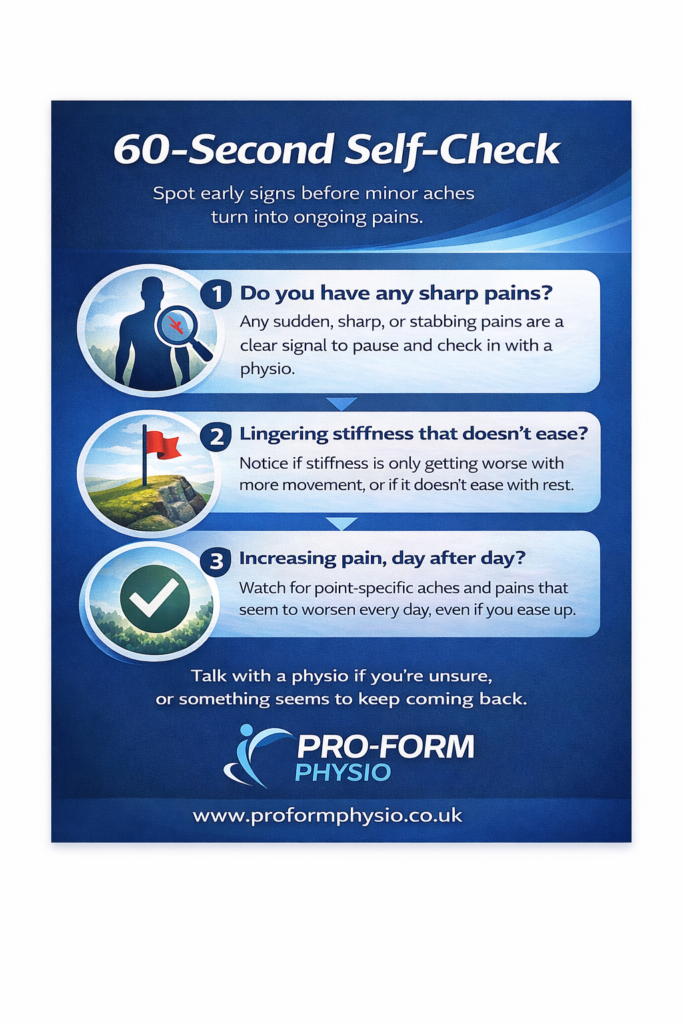
60-second self-check
Take a moment to run through these questions. If you answer yes to two or more, it’s usually worth getting some advice.
- It’s been hanging around for more than two weeks
- It keeps coming back after the same activities
- You’re changing how you move to avoid it
- It’s stopping you doing normal day-to-day things
- You feel unsure what to do next
Even if something feels small, a simple plan early on can save a lot of frustration later.
Three simple ways to stay comfortable
1. Go gradual
If winter was quieter, build activity back up slowly. Small increases give your body time to adapt.
2. Move little, often
Short, regular movement usually works better than one big push once a week.
3. Notice patterns
If the same ache shows up after the same activity each time, it usually needs a plan rather than endless rest.
When early support helps
If something feels minor but keeps returning, that’s often the best time to deal with it.
Early support is usually simpler, quicker, and less disruptive than waiting until pain starts limiting what you can do.
If you’re unsure what your body is telling you, getting advice early can help you move forward with confidence.
If you’d like help deciding what to do next, you can book an appointment or get in touch to talk things through.
Need advice about treatment?
Book an appointment or get in touch and we’ll help you choose the right next step.