
Why aches and pains often increase when you start doing more
As the days get longer and routines begin to shift, many people naturally find themselves doing more.
That might be walking further, getting back into exercise, tackling jobs at home, or simply spending more time outdoors. It’s a positive change, but it’s also one of the most common times we see aches and pains start to appear.As the days get longer and routines start to shift, many people naturally begin doing more. Whether it’s walking more, getting back into exercise, tackling jobs at home, or spending more time outdoors, this increase in activity is a positive change — but it can sometimes lead to unexpected aches and pains.
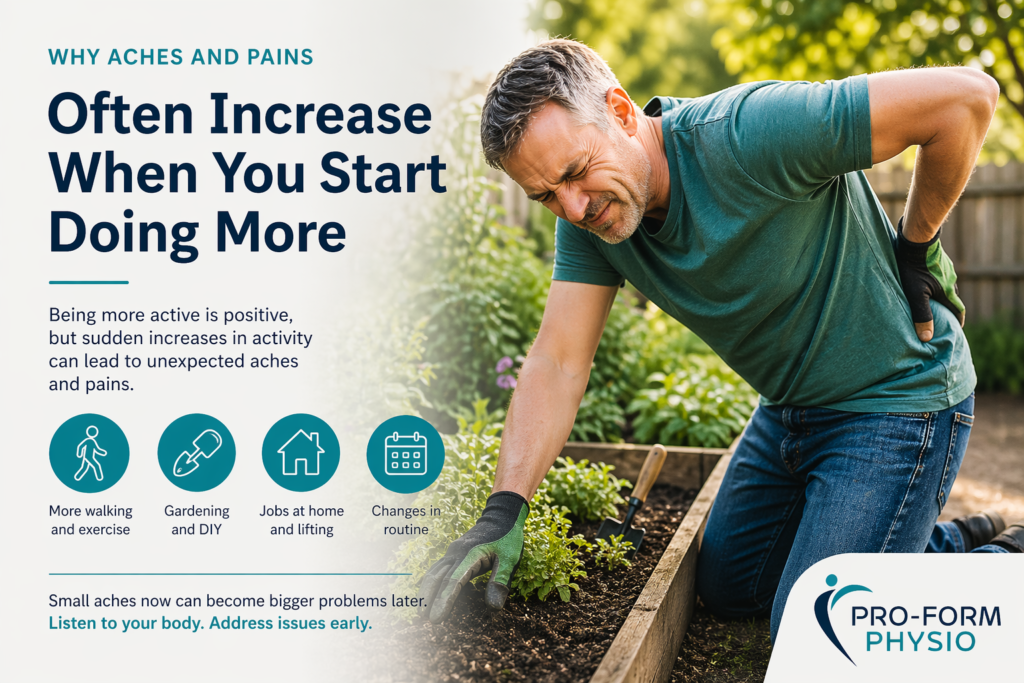
Why this happens
The body adapts well to gradual change. Problems tend to arise when activity increases faster than your body is ready for.
In clinic, we often see:
- Back pain after gardening or DIY (see our support page)
- Knee pain after increasing walking distances
- Shoulder or neck tension from repetitive tasks
- General stiffness after being more active than usual
In most cases, this isn’t due to a serious injury. It’s simply the body reacting to a sudden increase in load.
A common pattern we see
A typical scenario might be someone who has been relatively inactive over winter, then suddenly:
- Starts walking daily
- Spends hours in the garden over a weekend
- Lifts, bends and twists more than usual
Individually, these things seem manageable. Combined, they can place more demand on muscles and joints than they’ve been used to for some time.
When to take notice
It’s completely normal to feel some soreness when you become more active. However, it’s worth paying attention if:
- Pain is getting worse rather than improving
- Movement feels restricted or uncomfortable
- Symptoms last more than a few days
- The same issue keeps returning
These are often early signs that the body is struggling to keep up with the level of activity.
What actually helps
Small adjustments can make a big difference:
- Gradually build up activity levels rather than doing everything at once
- Take regular breaks during repetitive tasks
- Vary activities instead of repeating the same movements for long periods
- Address small issues early before they become more persistent
If things feel particularly tight or heavy, a sports massage can help reduce muscle tension and improve how your body is moving.
If symptoms are more specific or not settling, a physiotherapy assessment can help identify the cause and guide a quicker recovery.
Final thought
Being more active is always a positive step. The key is allowing your body time to adapt, rather than expecting it to handle a sudden increase in demand without any response.
Most issues we see at this time of year start small. Dealing with them early is usually the easiest way to stay active and avoid longer-term problems.
Need advice about treatment?
Book an appointment or get in touch and we’ll help you choose the right next step.