
With better weather and longer days, many people start returning to running, gym sessions, or regular exercise routines. Motivation is usually high at this point, but it’s also one of the most common times for injuries to occur.
Why injuries happen when restarting exercise
After a break, the body loses some of its tolerance to load. Even if something previously felt easy, jumping straight back in at the same intensity can place too much strain on muscles, joints and tendons.
This isn’t because anything is “wrong” – it’s simply that the body has deconditioned slightly and needs time to build back up again.
Common issues we see in clinic
When people return to exercise too quickly, we often see:
- Shin splints
- Knee pain (particularly around the kneecap)
- Achilles tendon irritation
- Calf strains
- Lower back discomfort
These problems don’t usually come from one specific injury. They tend to build up over time when the body is being asked to do more than it’s ready for.
The biggest mistake: doing too much, too soon
The most common issue is increasing activity levels too quickly.
This might look like:
- Running the same distance as before a break
- Increasing frequency and intensity at the same time
- Training on consecutive days without enough recovery
- Ignoring early signs of discomfort
It often feels manageable at first, which is why it’s easy to overlook – until symptoms start to settle in.
How to return to exercise safely
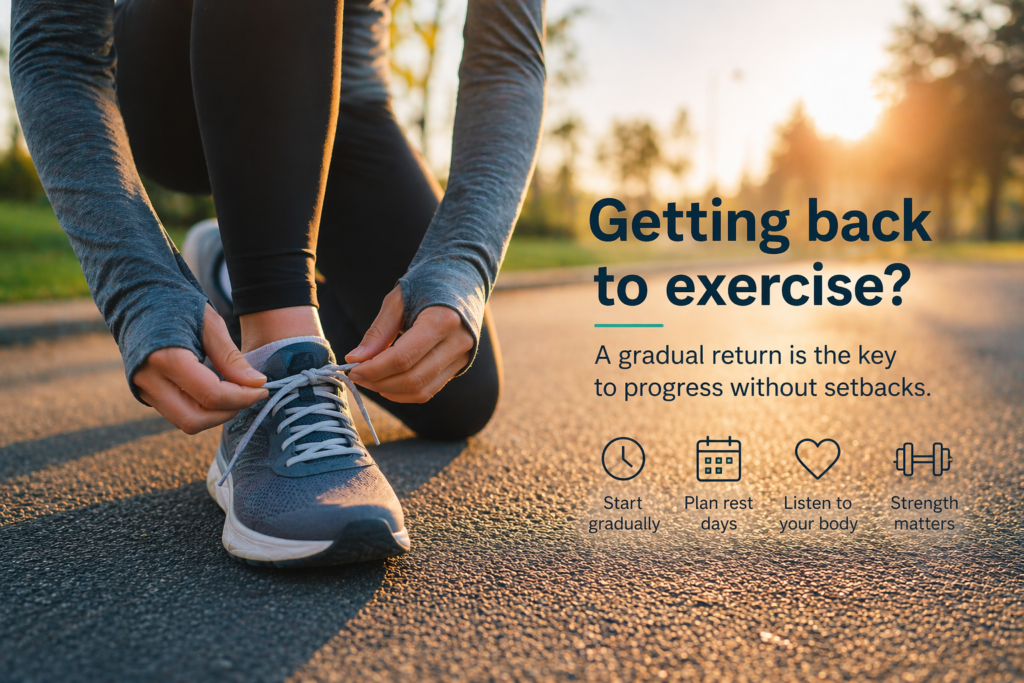
A gradual approach makes a significant difference in reducing the risk of injury.
That includes:
- Starting below your previous level and building up over time
- Allowing rest days between sessions
- Paying attention to how your body responds during and after activity
- Including strength work alongside cardio to support joints and muscles
Consistency over time is far more effective than pushing too hard too early.
Listen to early warning signs
Small symptoms are often the first indication that something isn’t quite right.
If you notice tightness, discomfort or a slight change in how you’re moving, it’s worth addressing it early rather than pushing through and hoping it settles.
In many cases, a sports massage can help reduce muscle tension and improve movement before it develops into something more persistent.
If symptoms continue or feel more specific, a physiotherapy assessment can help identify the cause and guide a safe return to exercise.
When to get it checked
It’s worth seeking advice if:
- Pain is getting worse rather than improving
- You’re adjusting how you move to avoid discomfort
- Symptoms last more than a few days
- The same issue keeps returning
Early treatment is usually much simpler and more effective than leaving things to progress.
Final thought
Getting back into exercise is always a positive step. The key is giving your body the time it needs to adapt, rather than expecting it to perform at the same level immediately.
A steady, consistent approach is what leads to long term progress – and helps you avoid the setbacks that can come from doing too much, too soon.
Need advice about treatment?
Book an appointment or get in touch and we’ll help you choose the right next step.