What is shockwave therapy?
Shockwave therapy is a non invasive treatment used in physiotherapy to help reduce pain and promote healing in injured or irritated tissues.
Unlike injections or surgery, shockwave therapy works with your body rather than replacing or bypassing it.
It uses targeted acoustic (sound) waves that are applied directly to the affected area. These waves stimulate the body’s natural healing response, making it particularly effective for long-standing or stubborn injuries.
How does shockwave therapy work?
When an injury becomes persistent, the body’s healing process can slow down or even stall completely. This is especially common in tendon-related conditions.
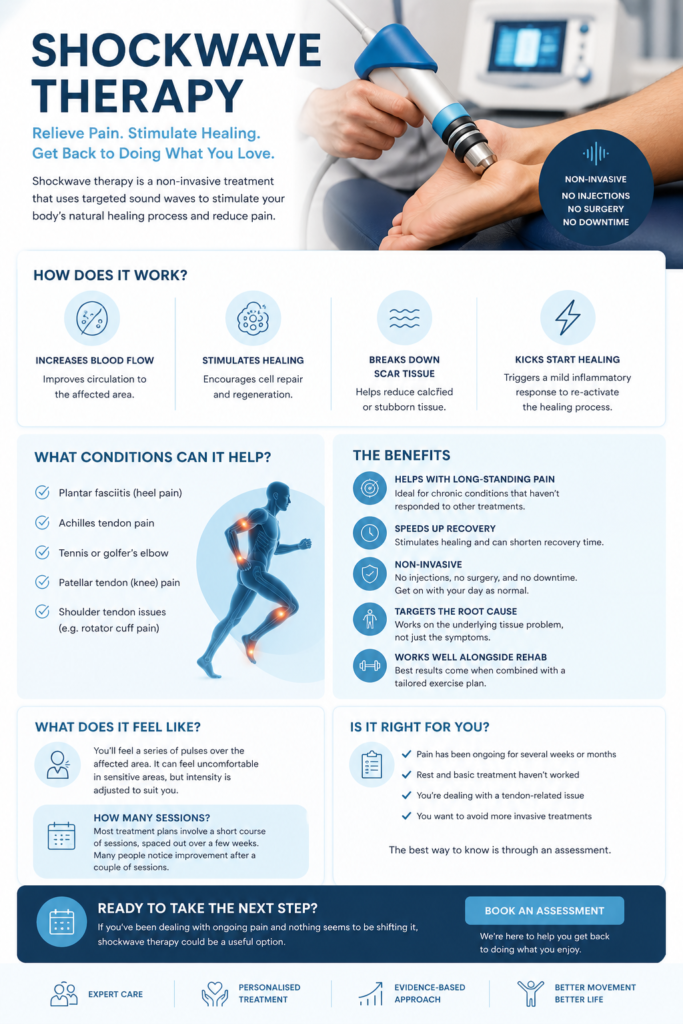
Shockwave therapy helps to “re-awaken” that healing process by:
- Increasing blood circulation to the area
- Stimulating cell repair and regeneration
- Breaking down calcified or scarred tissue
- Triggering a mild inflammatory response (which actually helps restart healing)
Think of it as giving your body a push in the right direction when it’s been stuck for a while.
What conditions can it help with?
Shockwave therapy is most commonly used for chronic tendon and soft tissue conditions, including:
- Plantar fasciitis (heel pain)
- Achilles tendon pain
- Tennis elbow and golfer’s elbow
- Patellar tendon (knee) pain
- Shoulder tendon issues (e.g. rotator cuff pain)
It is particularly useful when symptoms have been present for several weeks or months and haven’t improved with rest alone.
The benefits of shockwave therapy
1. Helps with long-standing pain
One of the biggest advantages is its effectiveness for chronic conditions.
If something has been lingering for months, this is often where shockwave really shines.
2. Speeds up recovery
By increasing blood flow and stimulating tissue repair, it can help shorten recovery time compared to waiting it out or relying on rest alone.
3. Non invasive treatment
There are no injections, no surgery, and no downtime required.
You can usually continue with your normal day immediately after treatment.
4. Targets the root cause
Rather than just reducing symptoms, shockwave works on the underlying tissue problem, helping to create longer-term improvement.
5. Works well alongside rehab
Shockwave isn’t a standalone “quick fix” (nothing actually is, despite what the internet promises).
It works best when combined with a structured exercise plan, helping you get better results faster.
What does shockwave therapy feel like?
During treatment, you’ll feel a series of pulses over the affected area.
Some areas can feel more sensitive than others, especially if the tissue is already irritated. Most people describe it as uncomfortable rather than painful, and the intensity can always be adjusted.
Sessions are usually short, often lasting around 5–10 minutes per area.
How many sessions will I need?
This can vary depending on the condition, but most treatment plans involve a short course of sessions, often spaced out over a few weeks.
You may start to notice improvements after a couple of sessions, although this can differ from person to person.
Is shockwave therapy right for you?
Shockwave therapy may be a good option if:
- Your pain has been ongoing for several weeks or months
- Rest and basic treatment haven’t worked
- You’re dealing with a tendon-related issue
- You want to avoid more invasive treatments
The best way to know is through an assessment, where we can determine whether it’s appropriate for your specific condition.
Why do we offer shockwave therapy?
We offer shockwave therapy because it’s an effective, evidence based treatment that can make a real difference for people struggling with persistent pain.
Combined with the right rehabilitation plan, it can help you recover more efficiently and get back to doing what you enjoy.
Ready to take the next step?
If you’ve been dealing with ongoing pain and nothing seems to be shifting it, shockwave therapy could be a useful option.
Booking an initial assessment is the best place to start so we can guide you towards the most effective treatment plan.
Need advice about treatment?
Book an appointment or get in touch and we’ll help you choose the right next step.